GET MORE SAVINGS WHEN YOU BOOK YOUR TRIP USING MY BUDGET TRAVEL LINKS ON EACH IMAGE
We Drove from Muscat to Al Hamra and Actually Enjoyed Every Bit of It
A no-fluff guide to Al Hamra — what to expect, where we stayed, what we saw, and why you should go.
4/25/20263 min read
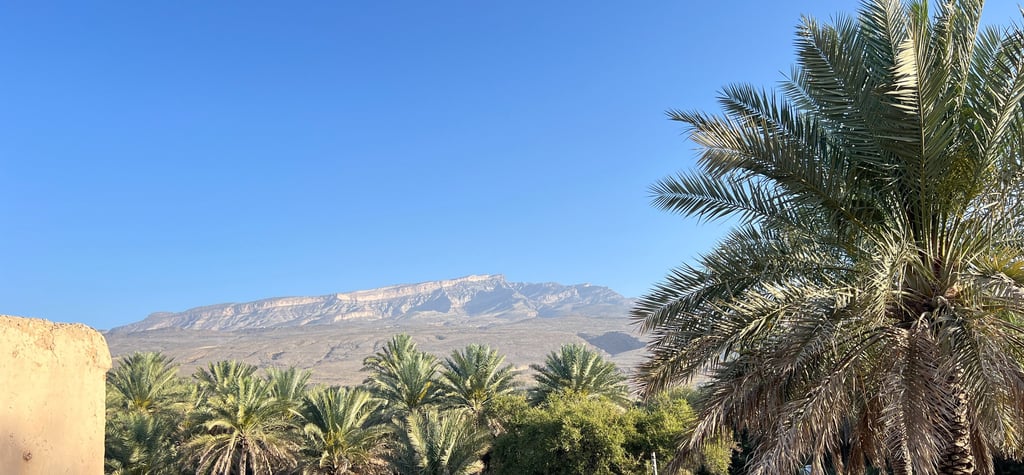
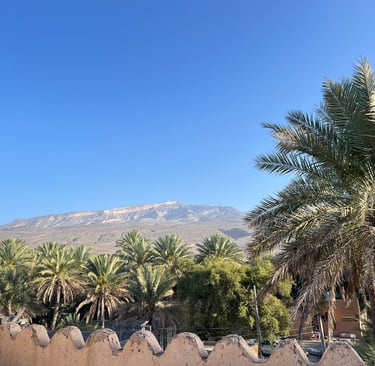
Al Hamra is a small mountain village in the Ad Dakhiliya region of Oman, about 2.5 hours from Muscat by car. It's known for its well-preserved old mud-brick village (Bait Al Safah), traditional falaj water channels, and views toward Jebel Shams. It's not crowded, it's not fancy, and it's 100% worth the drive.
Renting a car in Muscat and driving to Al Hamra
We picked up a rental car from Muscat International Airport first thing in the morning. Any standard sedan handles the drive fine — the roads are well-paved the whole way. You take the main highway toward Nizwa, then follow signs to Al Hamra from there. The whole drive is about 200 km and takes around 2.5 hours depending on traffic.
One thing to know: once you get closer to Al Hamra, the road gets narrower and winds a bit through the mountains. Nothing difficult, but it's not a motorway anymore. Go slow and enjoy it — the scenery starts getting really good at this point.
Where we stayed — a local house surrounded by palm trees
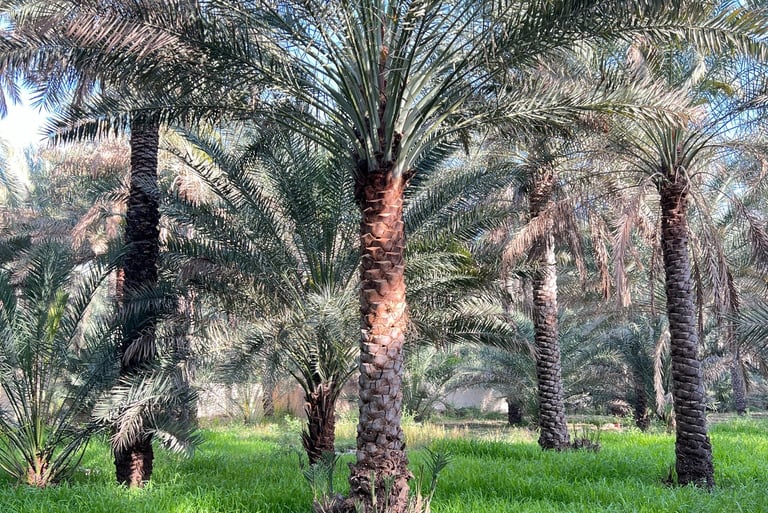
We stayed in a traditional Omani house right in the village. It was a proper local home — thick mud walls, low ceilings that keep it surprisingly cool, and a terrace completely surrounded by date palm trees. From where we were sitting, you could see the Hajar mountain range straight ahead. No resort vibes, no air freshener smell, just dates growing outside the window and total quiet.
If you have the option to stay in a locally-run guesthouse in Al Hamra rather than driving back to Nizwa, take it. The morning light on the mountains from that terrace was something else.
Walking around the neighbourhood
We did a slow walk around the village after settling in. There's no set trail or map — you just walk. The streets are quiet, there are cats everywhere, and you'll see traditional falaj irrigation channels running alongside the paths. These are ancient open water channels that bring water down from the mountains. The falaj system in Oman is actually a UNESCO-recognised engineering achievement and Al Hamra still has working ones you can walk alongside. You can book your tour guide here:
People live here. Kids were cycling, an older guy waved us over to share tea. It felt real, not like a tourist attraction dressed up as a village.
Exploring the old village of Al Hamra (Bait Al Safah)
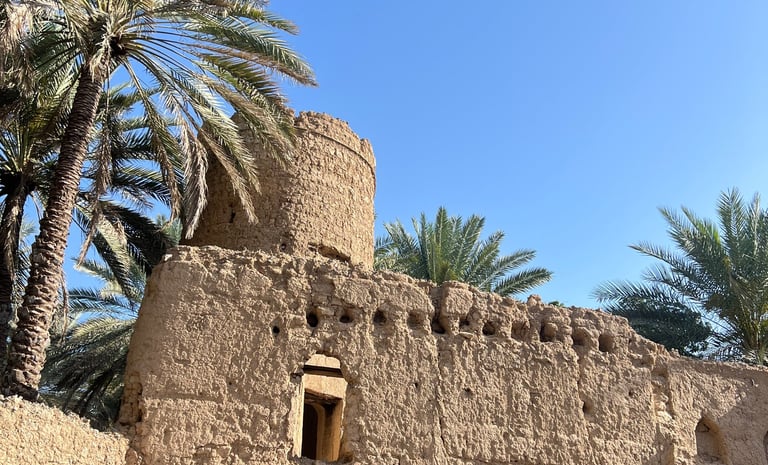
This is the main thing most people come to see, and it's worth it. The old village — sometimes called Bait Al Safah — is a collection of abandoned multi-storey houses built from mud brick, gypsum, and palm wood. No concrete, no steel. Just earth and timber, and these buildings are still standing.
The houses were built into the hillside, which is part of why they survived. Each floor had a different purpose: animals on the ground floor, food storage above that, then living areas, with the roof used for sleeping in summer. Some buildings are 5 to 7 storeys tall. You can walk through parts of it — some rooms still have the original carved wooden doors and decorative plaster on the walls.
The mud brick walls in Al Hamra's old village are naturally insulating — they keep the interior 10 to 15 degrees cooler than outside. No air conditioning needed.
Fast facts about Al Hamra, Oman
Location - Ad Dakhiliya region, Oman
Drive from Muscat
~2.5 hours (200 km)
Village age
400+ years, some foundations from the 10th century
Building material
Mud brick, gypsum, palm wood
Water system
Falaj — UNESCO-listed ancient irrigation
Nearby
Jebel Shams (Oman's highest peak) — 30 min drive
Best time to visit
October to March
Entry fee
Free to walk around the old village
Is Al Hamra worth visiting?
Yes, genuinely. It's not the kind of place that tries to impress you. There's no big visitor centre, no gift shop at the entrance. It's just an old Omani village that's been there for centuries doing its thing. If you're already heading to Nizwa or planning a Jebel Shams trip, Al Hamra is maybe 20 minutes off the route and worth stopping for at least half a day. If you want to slow down and actually experience it, stay a night. You won't regret it.
Practical note: Fuel up in Nizwa before heading to Al Hamra. Bring cash, wear comfortable shoes for the old village (uneven ground), and visit the old village in the morning before it gets hot. Most visits take 1–2 hours.